
Strategies for Vocabulary Intervention in Speech Therapy:
Semantic Mapping
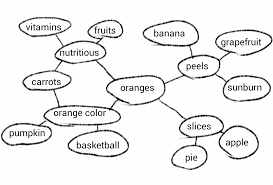
Semantic mapping is a great strategy for vocabulary intervention. Semantic mapping can be a web, map, or graphic organizer of different words and/or pictures centered around one main idea. This allows a child to visually see how a word is related to other words and concepts. See example below:
Expanding Expressions Tool (EET)
The EET is a great way to increase your child’s vocabulary and language skills. The EET looks at one main word or object and allows you to discuss the object by talking about its group/category, what it does, what it looks like, its different parts, and where you find it. The EET is a multi-sensory approach and allows a child to clearly define and understand different vocabulary words and objects around them.
Context Clues
Context clues are hints or clues that can be found within sentences, passages, or even movies and videos. These hints and clues found allow your student to understand the meaning of new vocabulary. Context clues can appear as definitions, synonyms, antonyms, and through making inferences/conclusions.
Semantic Feature Analysis
Semantic feature analysis is a speech therapy technique and a form of verbal cueing to improve one’s ability to name and word find. For example, “white”, “drink”, and “liquid” are semantic features of the word “milk”. They would help an individual with a word finding or naming deficit.